Household vs Industrial Ladders: What's the Difference?
Household ladders are lighter, compact and built for occasional home use; industrial ladders are heavier-duty, made for frequent professional use and higher loads. The rule of thumb: if you'll use it daily, on a worksite, or carry heavier loads, choose industrial; for everyday home chores, a household ladder is enough.
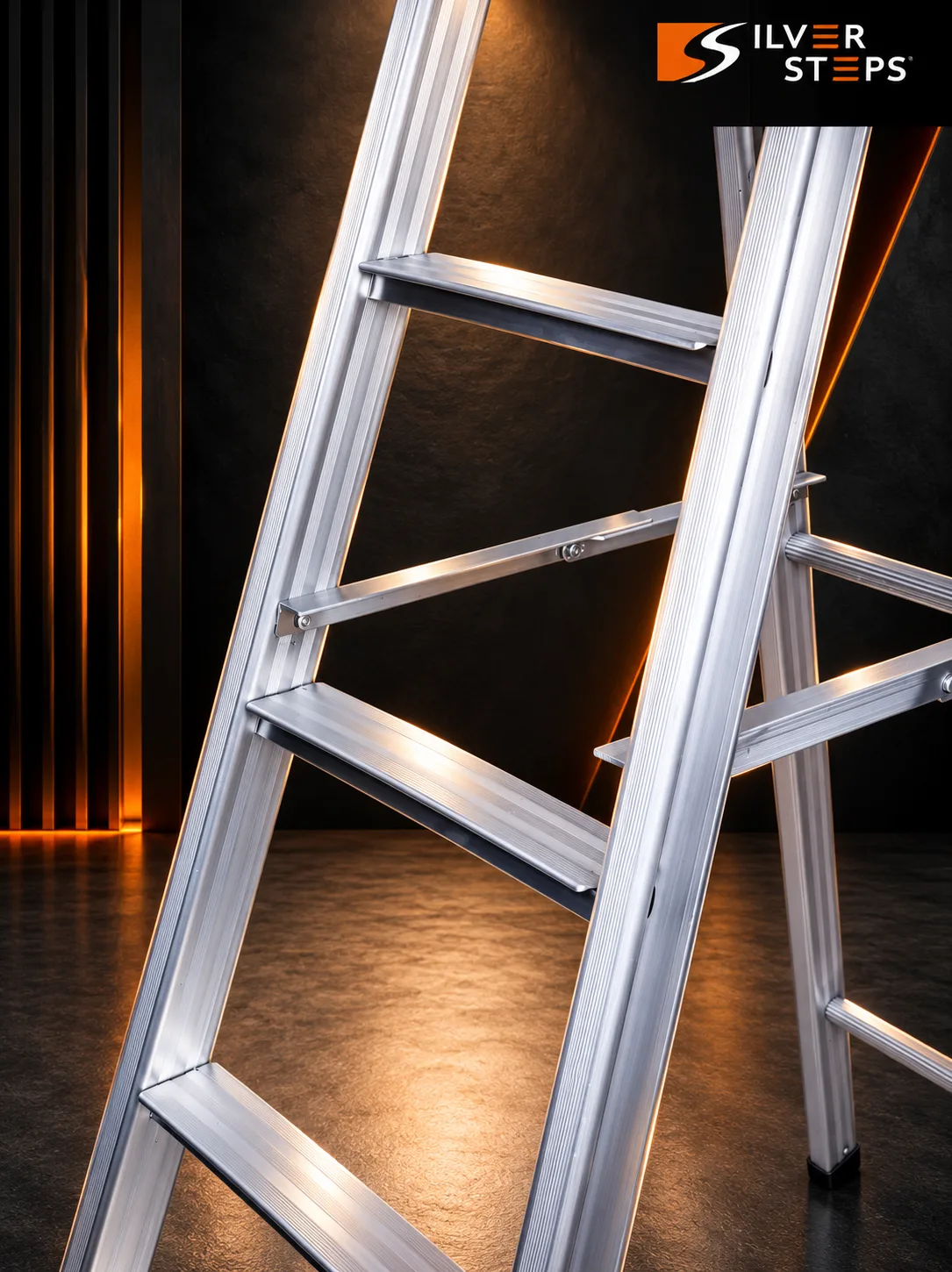 Certified Safety Build
Structural Engineering & Extrusion Wall Thickness
The primary technical differentiator between household and industrial equipment is metal thickness and joint reinforcement:
At first glance, an aluminium stepladder sold for domestic use may look similar to a heavy-duty unit deployed inside a manufacturing plant. Both feature stiles, rungs, and spreader braces. However, beneath the surface finish lies a significant disparity in structural alloy wall thickness, joint engineering, duty cycle endurance, and safety hardware. Deploying a lightweight domestic ladder into an industrial production plant is a frequent compliance failure that creates severe safety hazards. Understanding how these two classes differ ensures that your investment matches your working reality.
Household Ladders
Industrial Ladders
Duty Cycle Frequency & Safe Working Load Capacities
The duty cycle of access equipment measures not just how much weight the ladder holds at one static moment, but how frequently it endures dynamic climbing stresses:
A household ladder is designed for occasional use - perhaps once every couple of weeks to dust a ceiling fan, access overhead loft storage, or paint a feature wall. Over a five-year period, a domestic ladder might experience less than fifty hours of active climbing.
In contrast, an industrial ladder deployed inside an automotive assembly plant, logistics warehouse, or fabrication workshop is in active service six to eight hours a day, six days a week. Operators step onto the rungs repeatedly while carrying heavy toolboxes, impact wrenches, replacement motors, or welding cables. Using an under-rated domestic ladder for continuous factory work causes premature metal fatigue, loose rivets, and eventual structural collapse. Equipment must always remain within its rated working load capacity confirmed per product spec.
Safety Features & Ergonomic Additions
Industrial access equipment incorporates heavy-duty ergonomic features engineered to protect operators during prolonged working shifts:
Tread Depth
Standing Platforms & Guardrails
Foot Assemblies
Cost, Longevity & Return on Investment
Domestic ladders have a lower initial retail price because they use less metal and simpler hardware. For a homeowner, this makes complete economic sense, as a domestic ladder safely handles home tasks for many years.
For commercial enterprises, contractors, and facility managers, purchasing industrial-duty equipment represents substantially higher return on investment. An industrial ladder lasts through years of rough handling on job sites, resists denting from dropped tools, and prevents costly workplace accident liabilities. When outfitting entire facility teams or regional branches, commercial buyers can access volume pricing through our direct bulk procurement program.
Summary: How to Select for Your Application
To summarize: choose a household ladder for flats, residential bungalows, light retail shops, and occasional domestic cleaning. Choose an industrial ladder for manufacturing floors, construction sites, commercial HVAC maintenance, and logistics hubs where daily multi-user reliability is non-negotiable. Both categories carry Silver Steps' 2-year manufacturer guarantee direct from our Kurla West, Mumbai factory. For detailed site compliance verification, consult our comprehensive ladder safety guide.
Summary Checklist
- Duty Cycle Alignment: Match equipment duty to usage frequency: occasional chores = household; daily multi-user shifts = industrial.
- Extrusion Wall Thickness: Industrial ladders feature thicker extrusion walls and heavy solid rivets to resist continuous torsional racking.
- Commercial Site Mandate: Never deploy lightweight household ladders onto commercial construction sites or manufacturing floors.
- Weight & Rivet Density: Industrial units provide ergonomic benefits including wide anti-slip treads, standing platforms, and guardrails.
- Certified IS Compliance: Both ranges are backed by Silver Steps' 2-year manufacturer guarantee against genuine fabrication defects.
Mansoor Yusuf Khanani
Proprietor & Technical Director - Silver Steps (Manufacturer Since 2004)
Overseeing metal fabrication, structural aluminium alloys and dielectric fiberglass tooling at Silver Steps' Kurla West production workshop in Mumbai. Over 20 years of hands-on access equipment manufacturing, proof-load testing and industrial workplace safety compliance across India.
Common Questions
Keep Reading
Explore authoritative engineering guides, regulatory compliance standards, and access equipment rigging protocols.
SUMMARY CHECKLIST
Consult directly with Silver Steps' manufacturing desk in Kurla West, Mumbai. We build custom-engineered and standard certified access solutions for commercial facilities across India.