How Often Should You Inspect a Ladder?
Inspect a ladder before every use with a quick visual check, and carry out a more thorough, documented inspection periodically - more frequently for heavy industrial use. Any ladder that fails an inspection should be taken out of service immediately until it's repaired or replaced. Frequent checks catch damage before it causes a fall.
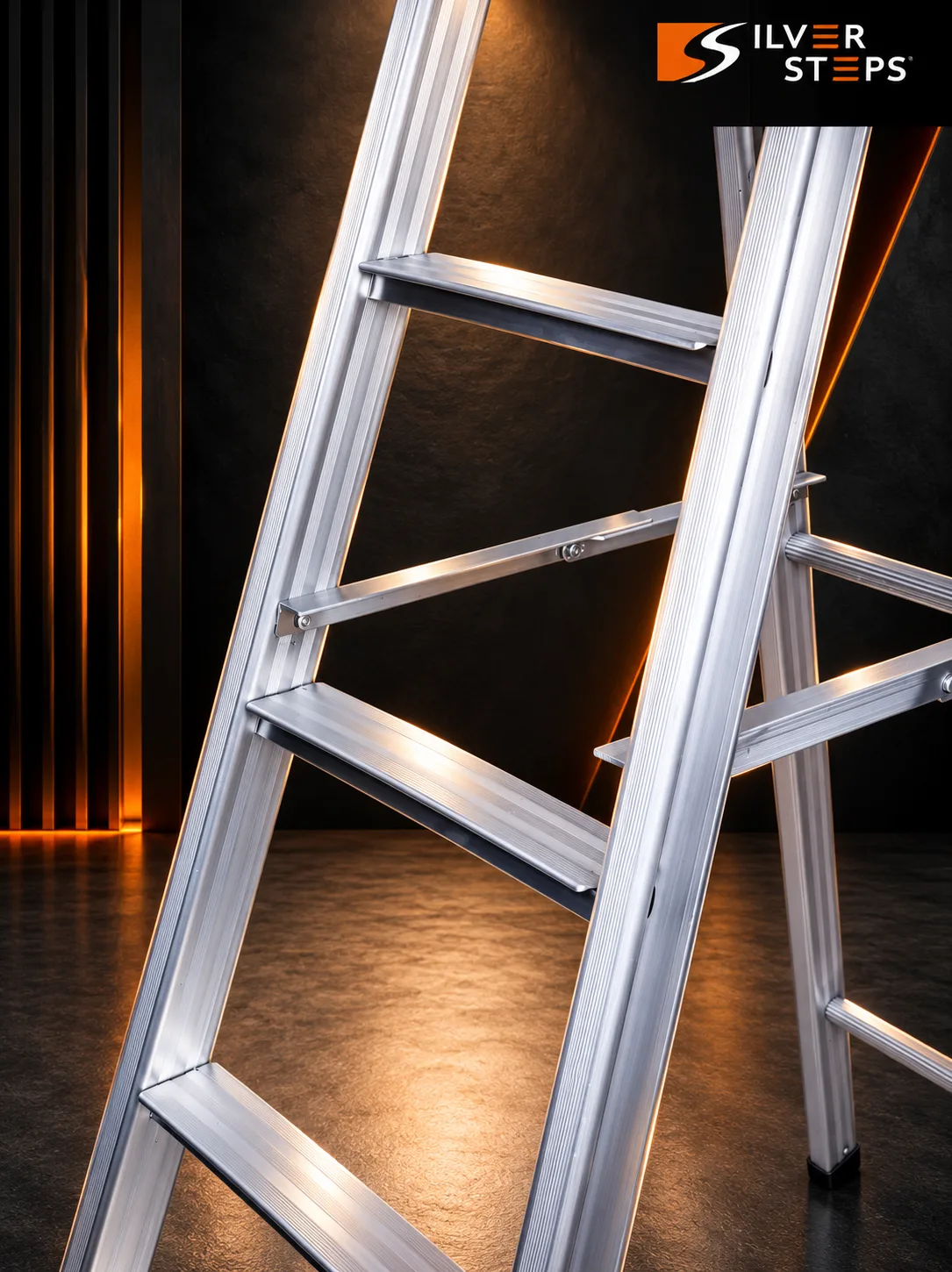
Before Every Use
A quick visual check each time - feet, rungs, rails, locks. Takes seconds, prevents most failures.
Positive Lock Engagement
Extend each rung section sequentially until the audible spring-loaded locking pawls snap firmly into place. Never climb on partially extended or unlocked segments.
Visual & Physical Verification
Physically push down on each extended section before ascending to confirm positive mechanical capture. A visual check ensures red indicator flags are completely recessed.
Engineering Quality Assurance
Silver Steps manufactures all access systems from high-tensile 6063-T6 architectural alloys and pultruded dielectric composites in Kurla West, Mumbai, with full 2-year guarantee backing.
Periodic Documented Inspections
A thorough recorded inspection at intervals suited to use; keep records for workplaces.
Pre-Shift Visual Walkaround
Inspect side rails for bends, cracks, or denting. Confirm rungs are tight with no rotational play, and ensure non-slip rubber feet are securely fastened with intact tread ribs.
Quarantine & Red-Tagging
If any structural member shows distortion, fractured welding, or failing locking pawls, immediately withdraw the ladder from service and affix a visible Red Defect tag.
Engineering Quality Assurance
Silver Steps manufactures all access systems from high-tensile 6063-T6 architectural alloys and pultruded dielectric composites in Kurla West, Mumbai, with full 2-year guarantee backing.
Frequency by Use Intensity
Occasional home use vs daily industrial use - heavier, frequent use needs more frequent formal inspection.
Pre-Shift Visual Walkaround
Inspect side rails for bends, cracks, or denting. Confirm rungs are tight with no rotational play, and ensure non-slip rubber feet are securely fastened with intact tread ribs.
Quarantine & Red-Tagging
If any structural member shows distortion, fractured welding, or failing locking pawls, immediately withdraw the ladder from service and affix a visible Red Defect tag.
Engineering Quality Assurance
Silver Steps manufactures all access systems from high-tensile 6063-T6 architectural alloys and pultruded dielectric composites in Kurla West, Mumbai, with full 2-year guarantee backing.
Critical Defect Flags & Trigger Events
Inspect immediately after a drop, overload, chemical/heat exposure, or any incident, regardless of schedule.
Pre-Shift Visual Walkaround
Inspect side rails for bends, cracks, or denting. Confirm rungs are tight with no rotational play, and ensure non-slip rubber feet are securely fastened with intact tread ribs.
Quarantine & Red-Tagging
If any structural member shows distortion, fractured welding, or failing locking pawls, immediately withdraw the ladder from service and affix a visible Red Defect tag.
Engineering Quality Assurance
Silver Steps manufactures all access systems from high-tensile 6063-T6 architectural alloys and pultruded dielectric composites in Kurla West, Mumbai, with full 2-year guarantee backing.
Who Should Inspect
A competent, trained person for formal inspections; every user for the before-use check.
Pre-Shift Visual Walkaround
Inspect side rails for bends, cracks, or denting. Confirm rungs are tight with no rotational play, and ensure non-slip rubber feet are securely fastened with intact tread ribs.
Quarantine & Red-Tagging
If any structural member shows distortion, fractured welding, or failing locking pawls, immediately withdraw the ladder from service and affix a visible Red Defect tag.
Engineering Quality Assurance
Silver Steps manufactures all access systems from high-tensile 6063-T6 architectural alloys and pultruded dielectric composites in Kurla West, Mumbai, with full 2-year guarantee backing.
What to Do on a Fail
Tag out of service immediately; don't use until repaired to manufacturer standard or replaced. Link the checklist (/ladder-safety/inspection-checklist/) and /blog/ladder-inspection-checklist/ once built.
Pre-Shift Visual Walkaround
Inspect side rails for bends, cracks, or denting. Confirm rungs are tight with no rotational play, and ensure non-slip rubber feet are securely fastened with intact tread ribs.
Quarantine & Red-Tagging
If any structural member shows distortion, fractured welding, or failing locking pawls, immediately withdraw the ladder from service and affix a visible Red Defect tag.
Engineering Quality Assurance
Silver Steps manufactures all access systems from high-tensile 6063-T6 architectural alloys and pultruded dielectric composites in Kurla West, Mumbai, with full 2-year guarantee backing.
Summary Checklist
- Daily Pre-Shift Walkaround: Quick visual before every use
- Monthly Facility Log: periodic documented inspection, more often for heavy use
- Formal 6-Month Recertification: inspect after any drop/overload
- Immediate Quarantine Protocol: fail = tag out immediately.
Mansoor Yusuf Khanani
Proprietor & Technical Director - Silver Steps (Manufacturer Since 2004)
Overseeing metal fabrication, structural aluminium alloys and dielectric fiberglass tooling at Silver Steps' Kurla West production workshop in Mumbai. Over 20 years of hands-on access equipment manufacturing, proof-load testing and industrial workplace safety compliance across India.
Common Questions
Keep Reading
Explore authoritative engineering guides, regulatory compliance standards, and access equipment rigging protocols.

Need Expert Advice on Industrial Ladders?
Speak directly with our access equipment engineers. Get exact load ratings, custom sizes, proof certificates, and wholesale factory pricing from Kurla West, Mumbai.