When to Retire or Replace a Ladder
Retire a ladder when it has structural damage - bent or cracked rails or rungs, failed or missing locks, corrosion, or loose joints - or if it's been dropped or overloaded and you can't be sure of its integrity. A compromised ladder is never worth the risk: take it out of service and replace it.
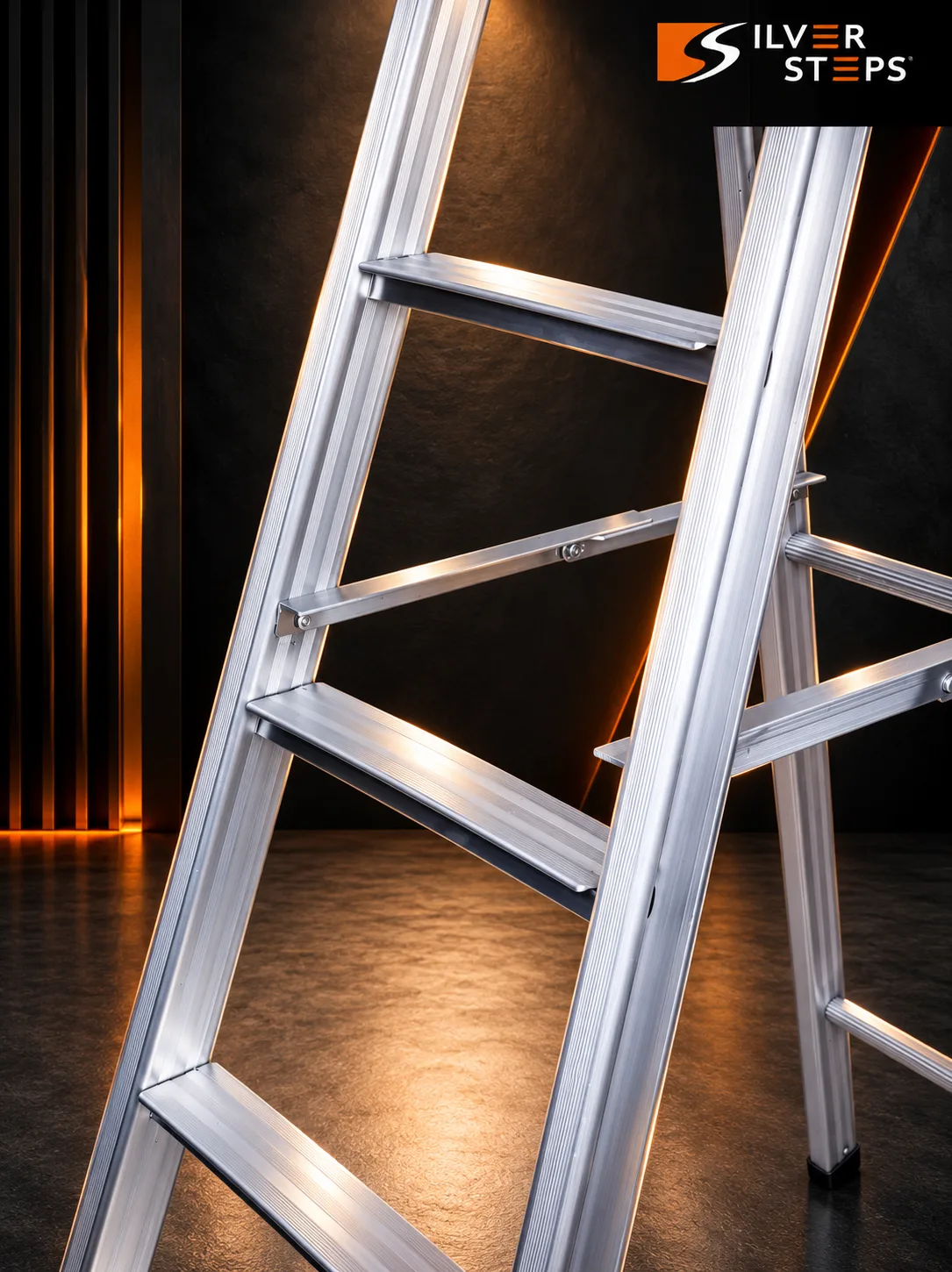
Signs It's Time to Retire
Bends, cracks, dents, splits, corrosion, loose or worn joints, missing feet, failed locks or spreaders, illegible rating labels.
Positive Lock Engagement
Extend each rung section sequentially until the audible spring-loaded locking pawls snap firmly into place. Never climb on partially extended or unlocked segments.
Visual & Physical Verification
Physically push down on each extended section before ascending to confirm positive mechanical capture. A visual check ensures red indicator flags are completely recessed.
Engineering Quality Assurance
Silver Steps manufactures all access systems from high-tensile 6063-T6 architectural alloys and pultruded dielectric composites in Kurla West, Mumbai, with full 2-year guarantee backing.
Mandatory Structural Audit After an Incident
If a ladder has been dropped, overloaded, or exposed to heat or chemicals, retire or thoroughly inspect before any reuse.
Pre-Shift Visual Walkaround
Inspect side rails for bends, cracks, or denting. Confirm rungs are tight with no rotational play, and ensure non-slip rubber feet are securely fastened with intact tread ribs.
Quarantine & Red-Tagging
If any structural member shows distortion, fractured welding, or failing locking pawls, immediately withdraw the ladder from service and affix a visible Red Defect tag.
Engineering Quality Assurance
Silver Steps manufactures all access systems from high-tensile 6063-T6 architectural alloys and pultruded dielectric composites in Kurla West, Mumbai, with full 2-year guarantee backing.
When Repair Is (and Isn't) Viable
Only repairs to manufacturer standard are acceptable; structural damage usually means replacement, not a patch.
Standard Operating Protocol
only repairs to manufacturer standard are acceptable; structural damage usually means replacement, not a patch.
Hazard Mitigation Directive
Never bypass safety lock dogs, compromise footings on unlevel surfaces, or exceed allowable working reach envelopes during elevated operations.
Engineering Quality Assurance
Silver Steps manufactures all access systems from high-tensile 6063-T6 architectural alloys and pultruded dielectric composites in Kurla West, Mumbai, with full 2-year guarantee backing.
Dielectric Composite & FRP-Specific Audits
Cracks, gouges or heavy contamination can reduce FRP's insulation - a damaged FRP ladder is no longer safe near electricity. Link /products/frp-ladders/.
Pultruded Non-Conductive Stiles
Continuous glass fiber roving saturated in thermosetting polyester resin forms dielectric channel stiles capable of isolating working personnel from hazardous shock currents.
Clean & Dry Stile Protocol
Even dielectric FRP can track current if coated in conductive moisture, greasy carbon soot, or acid film. Wipe stiles clean with dry cotton cloths before energised switchgear access.
Engineering Quality Assurance
Silver Steps manufactures all access systems from high-tensile 6063-T6 architectural alloys and pultruded dielectric composites in Kurla West, Mumbai, with full 2-year guarantee backing.
Taking It Out of Service
Tag it clearly and remove it so no one uses it by mistake.
Standard Operating Protocol
tag it clearly and remove it so no one uses it by mistake.
Hazard Mitigation Directive
Never bypass safety lock dogs, compromise footings on unlevel surfaces, or exceed allowable working reach envelopes during elevated operations.
Engineering Quality Assurance
Silver Steps manufactures all access systems from high-tensile 6063-T6 architectural alloys and pultruded dielectric composites in Kurla West, Mumbai, with full 2-year guarantee backing.
Equipment Disposal & Factory Replacement
Buy a correctly rated replacement factory-direct. Link /products/, /why-silver-steps/.
Standard Operating Protocol
buy a correctly rated replacement factory-direct. Link /products/, /why-silver-steps/.
Hazard Mitigation Directive
Never bypass safety lock dogs, compromise footings on unlevel surfaces, or exceed allowable working reach envelopes during elevated operations.
Engineering Quality Assurance
Silver Steps manufactures all access systems from high-tensile 6063-T6 architectural alloys and pultruded dielectric composites in Kurla West, Mumbai, with full 2-year guarantee backing.
Summary Checklist
- Cracked Stile Condemnation: Retire on damage, bends, cracks, corrosion or failed locks
- Bent Profile Compromise: retire after a drop or overload if integrity is uncertain
- Loose Rivet Structural Fatigue: only manufacturer-standard repairs count
- Immediate Green/Red Tagging: damaged FRP loses insulation
- Factory Direct Exchange: tag out and replace.
Mansoor Yusuf Khanani
Proprietor & Technical Director - Silver Steps (Manufacturer Since 2004)
Overseeing metal fabrication, structural aluminium alloys and dielectric fiberglass tooling at Silver Steps' Kurla West production workshop in Mumbai. Over 20 years of hands-on access equipment manufacturing, proof-load testing and industrial workplace safety compliance across India.
Common Questions
Keep Reading
Explore authoritative engineering guides, regulatory compliance standards, and access equipment rigging protocols.
Need Expert Advice on Industrial Ladders?
Speak directly with our access equipment engineers. Get exact load ratings, custom sizes, proof certificates, and wholesale factory pricing from Kurla West, Mumbai.