Narrow vs Broad Scaffolding: Which Width Do You Need?
Choose a narrow (single-width) scaffolding tower for tight corridors, doorways and compact indoor spaces, where access matters more than platform size. Choose a broad (double-width) tower when you need a larger working platform, room for materials and two workers, or greater stability at height. Width follows the space you have and the work you're doing.
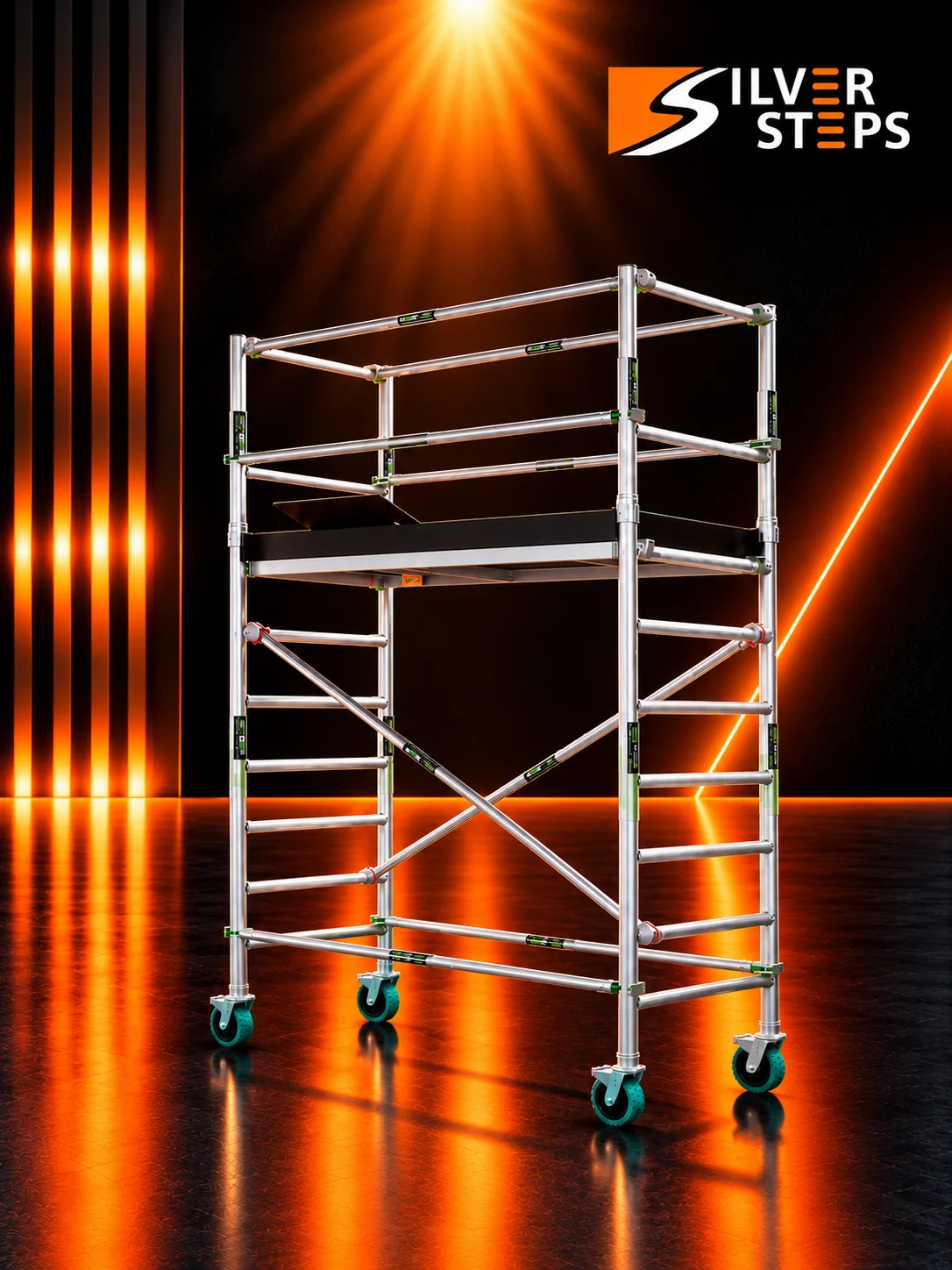 Certified Safety Build
Understanding Narrow vs Broad Scaffold Geometries
The difference between narrow and broad towers lies in frame width and working deck surface area:
When planning elevated work for commercial facilities, interior refurbishment, or industrial plant maintenance, one of the most critical structural decisions is choosing between a single-width (narrow) and a double-width (broad) aluminium mobile scaffolding tower. While both systems utilize identical high-tensile aluminium tubing, interlocking brace pins, and heavy-duty castor wheels, their structural footprints serve vastly different operational environments.
Selecting an excessively broad tower can leave maintenance teams unable to navigate through standard doorways or tight retail aisles. Conversely, specifying a narrow tower for high-elevation, material-intensive tasks can create cramped conditions that reduce worker productivity. As a Mumbai-based manufacturer since 2004, Silver Steps fabricates both configurations. Here is how to evaluate your architectural and operational constraints to specify the ideal width.
Narrow Scaffolding (Single-Width)
Broad Scaffolding (Double-Width)
Doorway Clearance, Corridors and Tight Access Challenges
Access logistics frequently dictate equipment choice before height is even considered:
Standard Doorway Navigation
Restricted Corridors and Narrow Aisles
Broad Model Requirements
Platform Capacity, Tool Storage and Multi-Worker Tasks
Working ergonomics and tooling requirements are equally important when selecting frame width:
Single-Worker Tasks
Two-Worker Synergy
Material Staging
Height Considerations and Base-to-Height Stability
Stability is governed by physics: the wider the base footprint, the higher a free-standing tower can safely be erected before outriggers reach practical limits:
Broad Tower Base Stability
Narrow Tower Outrigger Discipline
Application Breakdown - Where Each Width Excels
To assist in your specification, consider where each width delivers maximum return:
Select Narrow Scaffolding For
Select Broad Scaffolding For
Decision Framework - Measuring Your Worksite Constraints
Before placing an order, measure your facility's tightest transit point. Check standard door widths, passenger elevator door clearance, ceiling heights along transit corridors, and available working floor area. If your projects involve both tight interior spaces and spacious open atriums, contractors often purchase narrow units for interior work and rent broad towers for exterior tasks through our equipment rentals. Explore our full range of certified solutions under scaffolding towers or speak with our Mumbai engineering desk at contact Silver Steps for expert sizing guidance.
Summary Checklist
- Confined Space Erection: Narrow single-width towers excel in tight doorways, narrow corridors, and indoor retail environments.
- Heavy Deck Capacity: Broad double-width towers provide generous working decks for two operators, tool trays, and bulky materials.
- Outrigger Stabilization: Outriggers and stabilisers are essential on both types, particularly when erecting narrow towers to elevated working levels.
- Castor Wheel Locking: Measure door frames, corridor widths, and elevator dimensions before choosing your tower frame width.
- EN 1004 Rigging Standards: Silver Steps provides both narrow and broad towers for outright purchase or project-based rentals across India.
Mansoor Yusuf Khanani
Proprietor & Technical Director - Silver Steps (Manufacturer Since 2004)
Overseeing metal fabrication, structural aluminium alloys and dielectric fiberglass tooling at Silver Steps' Kurla West production workshop in Mumbai. Over 20 years of hands-on access equipment manufacturing, proof-load testing and industrial workplace safety compliance across India.
Common Questions
Keep Reading
Explore authoritative engineering guides, regulatory compliance standards, and access equipment rigging protocols.
SUMMARY CHECKLIST
Consult directly with Silver Steps' manufacturing desk in Kurla West, Mumbai. We build custom-engineered and standard certified access solutions for commercial facilities across India.