The 4:1 Ladder Angle Rule Explained
The 4:1 rule sets the safe angle for a leaning ladder: for every four units of height, the base should sit one unit out from the wall - roughly a 75° angle. Set too steep, the ladder can tip backwards; set too shallow, the feet can slide out. The 4:1 angle balances both risks.
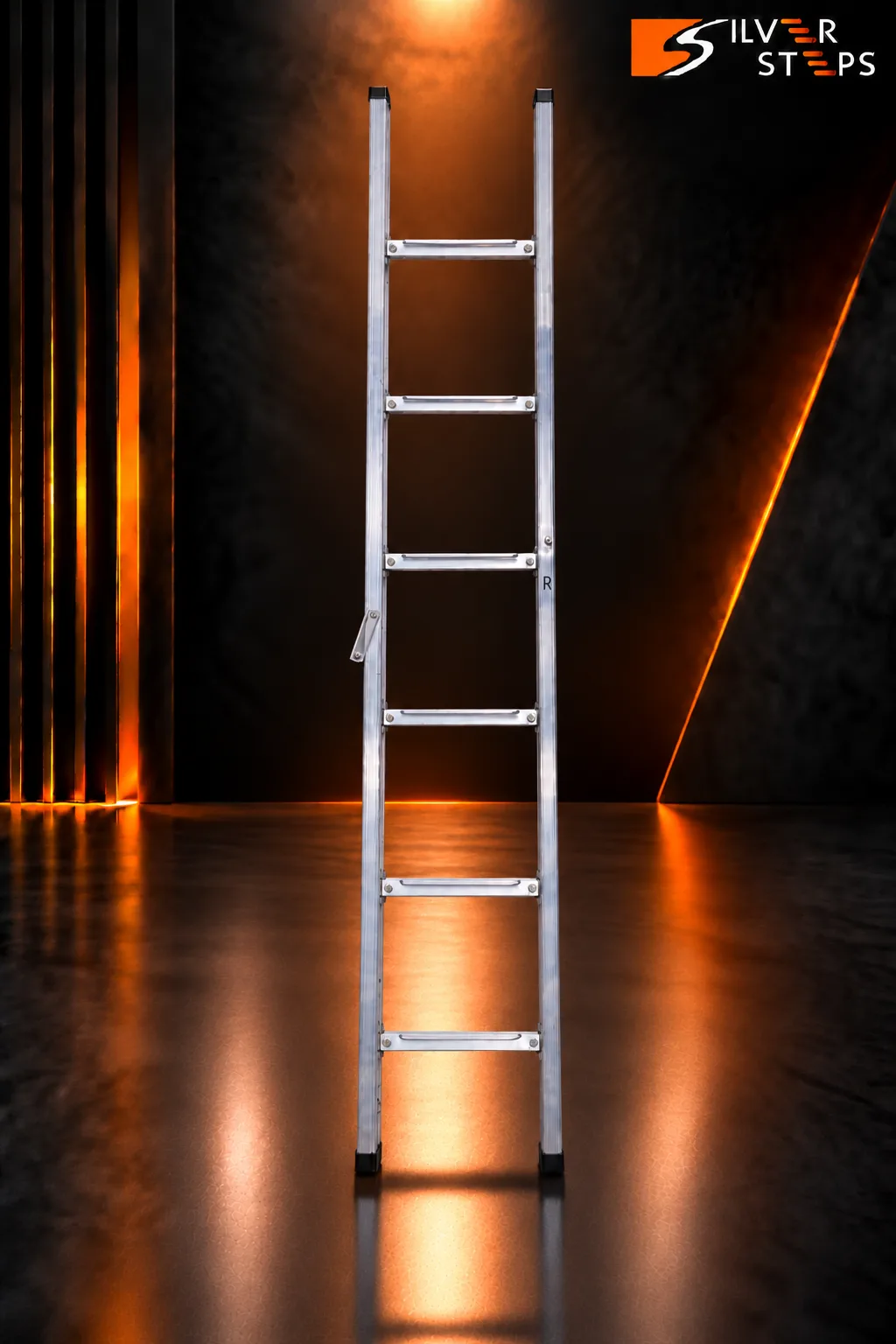
What the 4:1 Ratio Actually Means
The ratio of vertical height to base distance for a leaning ladder, giving about 75°.
The 4:1 Pitch Equation
For every 4 meters of vertical working height, position the ladder base exactly 1 meter away from the wall. This achieves the optimum 75.5-degree angle of maximum structural stability.
The Arm Extension Palm Test
Stand with your toes against the ladder feet and extend your arms forward horizontally. Your palms should rest comfortably on the rungs at shoulder height.
Engineering Quality Assurance
Silver Steps manufactures all access systems from high-tensile 6063-T6 architectural alloys and pultruded dielectric composites in Kurla West, Mumbai, with full 2-year guarantee backing.
How to Check the Angle Quickly & Accurately
Base-out = working height ÷ 4; or the "stand-and-reach" check - stand with toes at the feet, arms straight out should just touch a rung.
Standard Operating Protocol
base-out = working height ÷ 4; or the "stand-and-reach" check - stand with toes at the feet, arms straight out should just touch a rung.
Hazard Mitigation Directive
Never bypass safety lock dogs, compromise footings on unlevel surfaces, or exceed allowable working reach envelopes during elevated operations.
Engineering Quality Assurance
Silver Steps manufactures all access systems from high-tensile 6063-T6 architectural alloys and pultruded dielectric composites in Kurla West, Mumbai, with full 2-year guarantee backing.
Why the Ladder Angle Critically Matters
Too steep → tip-back; too shallow → slide-out. Both are common fall causes.
The 4:1 Pitch Equation
For every 4 meters of vertical working height, position the ladder base exactly 1 meter away from the wall. This achieves the optimum 75.5-degree angle of maximum structural stability.
The Arm Extension Palm Test
Stand with your toes against the ladder feet and extend your arms forward horizontally. Your palms should rest comfortably on the rungs at shoulder height.
Engineering Quality Assurance
Silver Steps manufactures all access systems from high-tensile 6063-T6 architectural alloys and pultruded dielectric composites in Kurla West, Mumbai, with full 2-year guarantee backing.
Securing the Ladder at Top and Bottom
Stable footing, secure or have someone foot the ladder, top resting against a solid surface.
Standard Operating Protocol
stable footing, secure or have someone foot the ladder, top resting against a solid surface.
Hazard Mitigation Directive
Never bypass safety lock dogs, compromise footings on unlevel surfaces, or exceed allowable working reach envelopes during elevated operations.
Engineering Quality Assurance
Silver Steps manufactures all access systems from high-tensile 6063-T6 architectural alloys and pultruded dielectric composites in Kurla West, Mumbai, with full 2-year guarantee backing.
Extension Overlap and Extra Landing Length
Keep a safe section overlap, and extra length above the landing if climbing onto a surface.
Standard Operating Protocol
keep a safe section overlap, and extra length above the landing if climbing onto a surface.
Hazard Mitigation Directive
Never bypass safety lock dogs, compromise footings on unlevel surfaces, or exceed allowable working reach envelopes during elevated operations.
Engineering Quality Assurance
Silver Steps manufactures all access systems from high-tensile 6063-T6 architectural alloys and pultruded dielectric composites in Kurla West, Mumbai, with full 2-year guarantee backing.
Common Pitch Mistakes and Prevention Steps
Guessing the angle, soft ground, unsecured top. Applies to leaning/extension ladders - not self-supporting step ladders.
The 4:1 Pitch Equation
For every 4 meters of vertical working height, position the ladder base exactly 1 meter away from the wall. This achieves the optimum 75.5-degree angle of maximum structural stability.
The Arm Extension Palm Test
Stand with your toes against the ladder feet and extend your arms forward horizontally. Your palms should rest comfortably on the rungs at shoulder height.
Engineering Quality Assurance
Silver Steps manufactures all access systems from high-tensile 6063-T6 architectural alloys and pultruded dielectric composites in Kurla West, Mumbai, with full 2-year guarantee backing.
Summary Checklist
- One Meter Out per Four Up: Four up, one out ≈ 75°
- 75.5-Degree Optimum Balance: too steep tips back, too shallow slides out
- Arm Extended Palm Test: use the arms-out check
- Zero Base Kick-Out: secure top and bottom
- Firm Floor Anti-Slip Feet: step ladders are exempt (self-supporting).
Mansoor Yusuf Khanani
Proprietor & Technical Director - Silver Steps (Manufacturer Since 2004)
Overseeing metal fabrication, structural aluminium alloys and dielectric fiberglass tooling at Silver Steps' Kurla West production workshop in Mumbai. Over 20 years of hands-on access equipment manufacturing, proof-load testing and industrial workplace safety compliance across India.
Common Questions
Keep Reading
Explore authoritative engineering guides, regulatory compliance standards, and access equipment rigging protocols.

Need Expert Advice on Industrial Ladders?
Speak directly with our access equipment engineers. Get exact load ratings, custom sizes, proof certificates, and wholesale factory pricing from Kurla West, Mumbai.