Wall Extension Ladder: Setup & Pulley Use
To set up a wall (rope-operated) extension ladder, lean it at the 4:1 angle on firm level ground, use the rope and pulley to extend the upper section smoothly to a safe overlap, confirm the rung latches engage, and secure the top before climbing. Lower it with the rope under control - never let the sections drop freely.
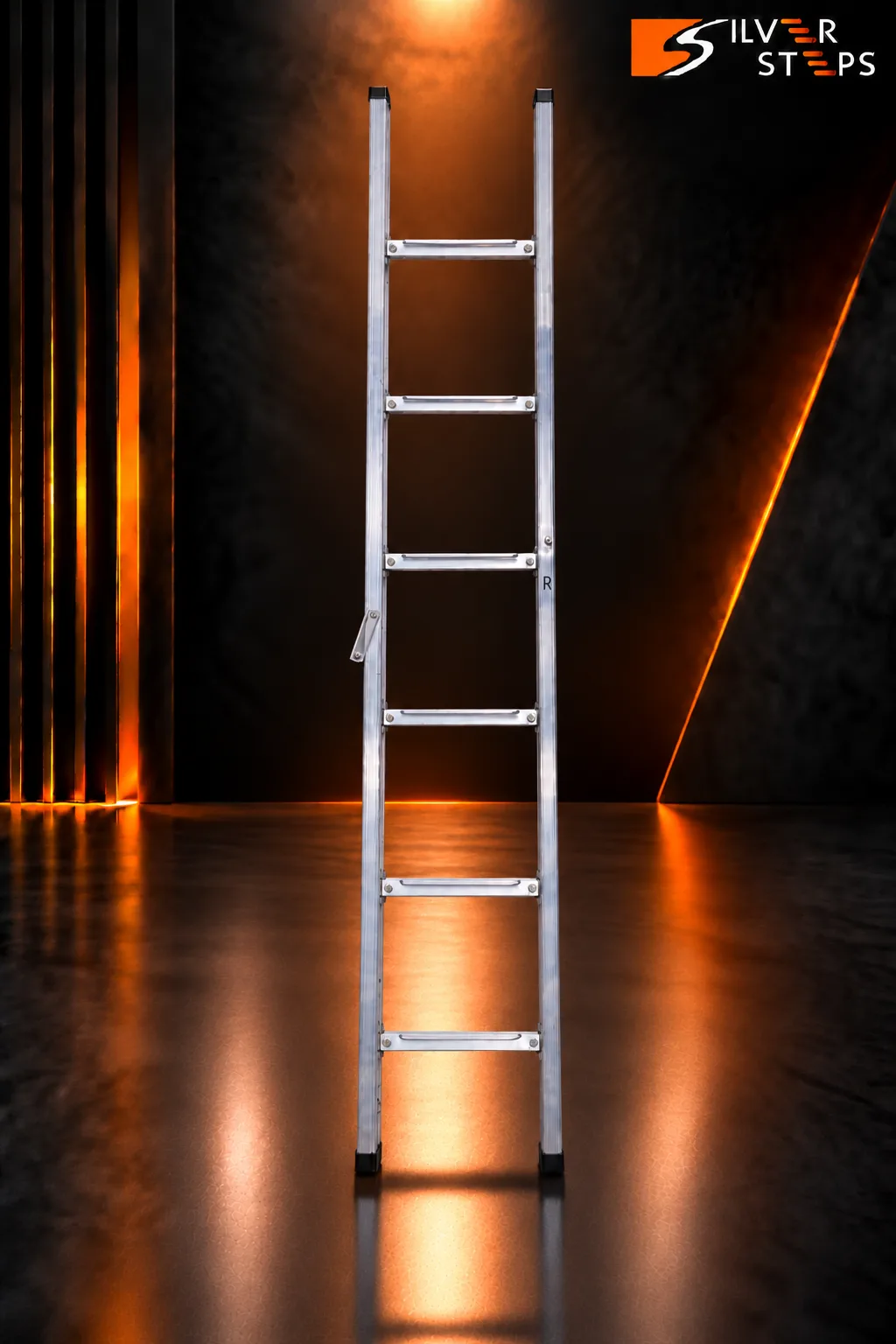
4 - 1 Angle & Firm Base
Lean at about 75° on solid, level ground. Link /products/industrial-ladders/wall-extension-ladder/.
The 4:1 Pitch Equation
For every 4 meters of vertical working height, position the ladder base exactly 1 meter away from the wall. This achieves the optimum 75.5-degree angle of maximum structural stability.
The Arm Extension Palm Test
Stand with your toes against the ladder feet and extend your arms forward horizontally. Your palms should rest comfortably on the rungs at shoulder height.
Engineering Quality Assurance
Silver Steps manufactures all access systems from high-tensile 6063-T6 architectural alloys and pultruded dielectric composites in Kurla West, Mumbai, with full 2-year guarantee backing.
Extend with the Rope & Pulley
Pull smoothly to raise the upper section; keep clear of the rope path.
Positive Lock Engagement
Extend each rung section sequentially until the audible spring-loaded locking pawls snap firmly into place. Never climb on partially extended or unlocked segments.
Visual & Physical Verification
Physically push down on each extended section before ascending to confirm positive mechanical capture. A visual check ensures red indicator flags are completely recessed.
Engineering Quality Assurance
Silver Steps manufactures all access systems from high-tensile 6063-T6 architectural alloys and pultruded dielectric composites in Kurla West, Mumbai, with full 2-year guarantee backing.
Confirm the Latches Engage
Make sure the rung latches/hooks seat before loading.
Standard Operating Protocol
make sure the rung latches/hooks seat before loading.
Hazard Mitigation Directive
Never bypass safety lock dogs, compromise footings on unlevel surfaces, or exceed allowable working reach envelopes during elevated operations.
Engineering Quality Assurance
Silver Steps manufactures all access systems from high-tensile 6063-T6 architectural alloys and pultruded dielectric composites in Kurla West, Mumbai, with full 2-year guarantee backing.
Safe Section Overlap
Keep enough overlap between sections for strength.
Standard Operating Protocol
keep enough overlap between sections for strength.
Hazard Mitigation Directive
Never bypass safety lock dogs, compromise footings on unlevel surfaces, or exceed allowable working reach envelopes during elevated operations.
Engineering Quality Assurance
Silver Steps manufactures all access systems from high-tensile 6063-T6 architectural alloys and pultruded dielectric composites in Kurla West, Mumbai, with full 2-year guarantee backing.
Secure the Top
Rest or tie the top against a solid point before climbing.
Standard Operating Protocol
rest or tie the top against a solid point before climbing.
Hazard Mitigation Directive
Never bypass safety lock dogs, compromise footings on unlevel surfaces, or exceed allowable working reach envelopes during elevated operations.
Engineering Quality Assurance
Silver Steps manufactures all access systems from high-tensile 6063-T6 architectural alloys and pultruded dielectric composites in Kurla West, Mumbai, with full 2-year guarantee backing.
Controlled Lowering
Release the rope slowly; never let sections fall. Inspect rope and pulley before use. Link /ladder-safety/inspection-checklist/.
Pre-Shift Visual Walkaround
Inspect side rails for bends, cracks, or denting. Confirm rungs are tight with no rotational play, and ensure non-slip rubber feet are securely fastened with intact tread ribs.
Quarantine & Red-Tagging
If any structural member shows distortion, fractured welding, or failing locking pawls, immediately withdraw the ladder from service and affix a visible Red Defect tag.
Engineering Quality Assurance
Silver Steps manufactures all access systems from high-tensile 6063-T6 architectural alloys and pultruded dielectric composites in Kurla West, Mumbai, with full 2-year guarantee backing.
Summary Checklist
- Smooth Pulley Cord Hoist: 4:1 angle, firm base
- Gravity Rung Catch Lock: extend smoothly with the rope and pulley
- 3-Rung Minimum Overlap: confirm latches engage
- Tie-Off Top Anchoring: keep a safe overlap
- Base Wall Offset Formula: secure the top
- Key Parameter 06: lower under control
- Key Parameter 07: inspect rope and pulley.
Mansoor Yusuf Khanani
Proprietor & Technical Director - Silver Steps (Manufacturer Since 2004)
Overseeing metal fabrication, structural aluminium alloys and dielectric fiberglass tooling at Silver Steps' Kurla West production workshop in Mumbai. Over 20 years of hands-on access equipment manufacturing, proof-load testing and industrial workplace safety compliance across India.
Common Questions
Keep Reading
Explore authoritative engineering guides, regulatory compliance standards, and access equipment rigging protocols.

Need Expert Advice on Industrial Ladders?
Speak directly with our access equipment engineers. Get exact load ratings, custom sizes, proof certificates, and wholesale factory pricing from Kurla West, Mumbai.